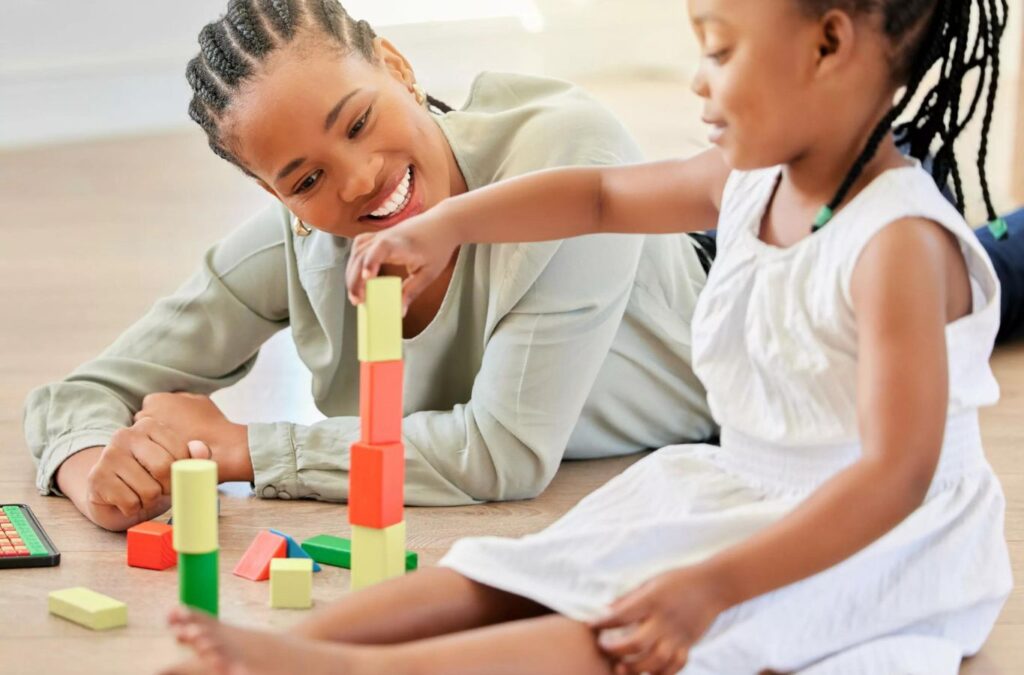
Autistic children are faced with a serious struggle to navigate social environments. Communication problems, the inability to pay attention to others, and the inability to perceive social signals are some of the barriers that should be addressed specifically.
Although Applied Behavior Analysis (ABA) therapy can be effectively applied in many environments, Center-Based ABA Therapy provides a clear advantage in enhancing the process of the development of social skills. The transfer of therapy to the home to a dedicated clinical setting submerges children in an artificial ecosystem that serves to promote the processes of interaction, imitation, and peer learning.
The Power of the Clinical Environment
As compared to house-based therapy, which may be conducted alone with a therapist, a center based setting mimics the situations at a classroom or playground. This environment is specifically designed in a way that reduces the chances of distractions and gives the maximum opportunities of social interaction under supervision. The closed setting enables the therapists to recreate certain social situations that a child would not experience in the natural setting at home.
Milestones DFW clinic-based services programs are some of the programs that apply these controlled settings to introduce social variables systematically. This may entail peer-to-peer rotation by doing activities to show a child how to greet various individuals or group transition management to impart compliance and waiting skills. The foreseeability of the clinic decreases the fear that children tend to develop in an unpredictable social situation and enables them to be fully concerned with the gimmicks of interaction.
Structured Peer Interaction
Peers are the most important source of social growth acceleration within a clinic environment. The most important intercourse in home-based therapy is between the child and the adult. Children are also able to socialize with other children at a center that is also striving to achieve similar objectives.
- Investigation and Mimicking: The children imitate others. They have the opportunity to watch others in a group performing well, and they are encouraged to emulate the behaviors.
- Cooperative Play: There, therapists organize games in which two or more children have to collaborate, develop a sense of teamwork, and enjoy themselves together.
- Social Generalization: Isolated skills (such as making eye contact) are applied right away, with new individuals, so that the skill sticks in the real world.
Comparison of Skill Acquisition
In order to see why the center-based model tends to be quicker when it comes to social skills, it is helpful to examine the intensity and opportunity differences.
| Feature | Home-Based Therapy | Center-Based Therapy |
| Social Partners | Primarily interactions with an adult therapist or family members | Opportunity to interact with multiple peers and various adults |
| Distraction Control | High environmental control with low social distractions | Managed social distractions that mirror real-world settings |
| Group Dynamics | Difficult to simulate peer-to-peer social scenarios | Real-time practice for social skills like waiting and turn-taking |
| Environment | Takes place in the child’s comfort zone (familiar setting) | Simulated school or playground environment for better transition |
Key Social Skills Targeted in the Clinic
A center based program curriculum is structured to deconstruct complex social behaviors to be taught. The aim is to create a background that enables the child to excel both at school and in society.
- Communication: Learning to pay attention to something or somebody with another individual is a stepping stone to communication.
- Emotional Control: How to deal with frustration in response to losing a game or losing a toy to another child.
- Turn-Taking: This is where one gets to know how to follow a conversation, not only through words, but also through non-verbal communication.
- Play Skills: Differentiating between solitary play (playing alone), parallel play (playing near others), and then finally, cooperative play (playing with others).
Key Social Skills Targeted in the Clinic
A social error in a busy playground would go unaddressed or result in rejection, which is discouraging. In a center based ABA environment, all social interactions provide a chance to teach.
When a child interrupts another child, a therapist is immediately ready to make corrections to the behavior with gentleness and suggest an alternative variant, e.g., raise a hand or wait until the other party has had their turn. This positive feedback loop avoids reinforcement of bad habits and solidifies positive social behaviors within the shortest time.
The immersiveness of clinical support is a stimulus that can trigger breakthroughs in the mind of parents who want to increase the social confidence of their child. Through the peer rich environment of such facilities as the services at the Milestones DFW clinic-based services, the children would be able to practice social skills in real-time, so that they would not only learn, but also master them. That is a whole approach that makes sure that children are not only prepared to learn, but also prepared to interact with the world they are living in.