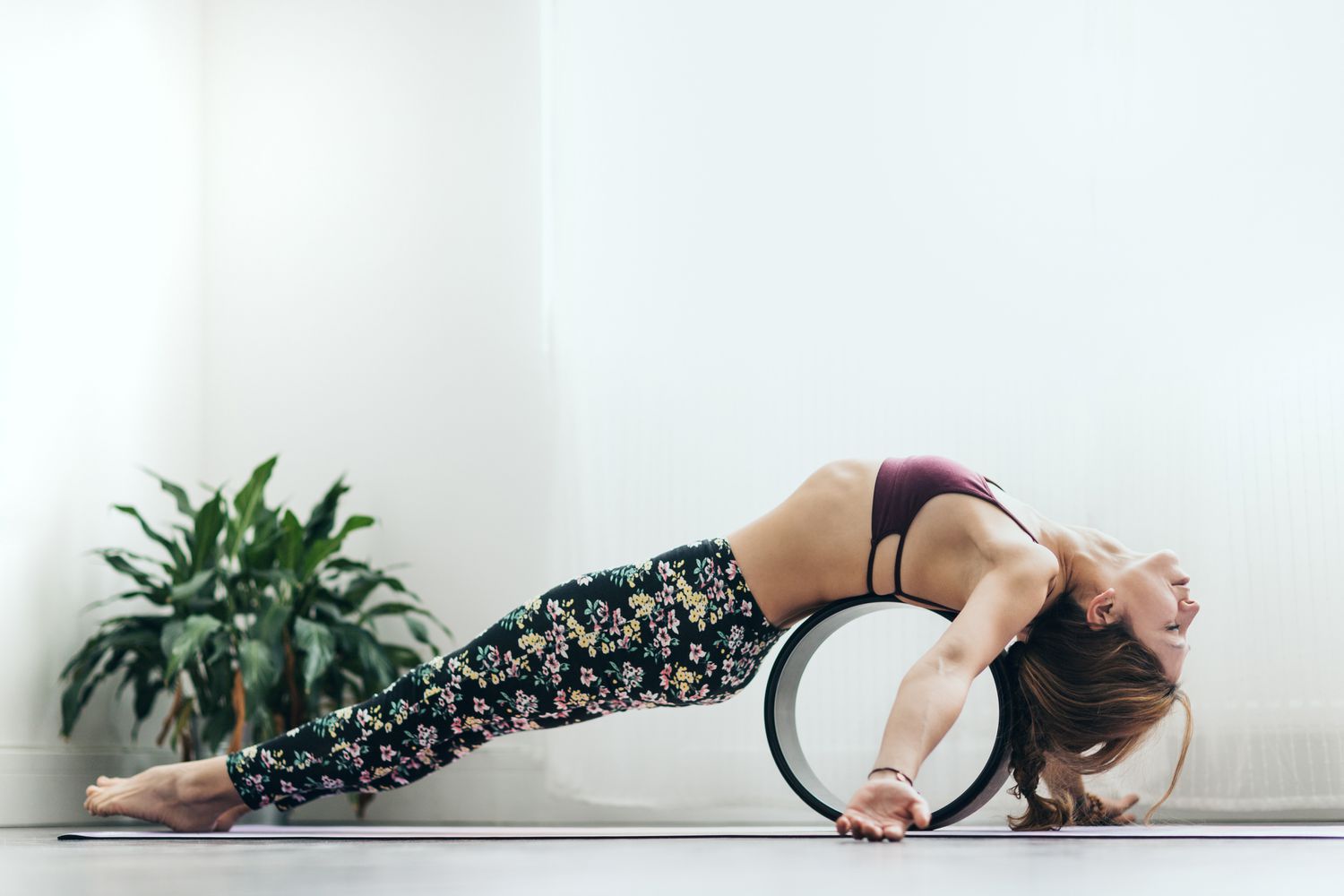
Props can change the way students experience yoga. They provide support, feedback and new ways to understand movement. A yoga wheel is one example of how prop-based practice can help practitioners explore deeper range with more control, especially in backbends, chest opening and mobility-focused work. Using props does not mean the practice is easier or less authentic. In many cases, props make the practice more intelligent. They help students access movement safely, notice alignment and avoid forcing the body. A prop can reveal what is actually happening in a posture, which is why it is valuable for both experienced and developing practitioners.
Why deeper range needs control
Many students want to become more flexible, but flexibility without control can be risky. The body needs strength and awareness to support deeper range. Otherwise, students may collapse into joints, overstretch tissues or rely on passive positions. Prop-based practice helps because it gives the body information. The prop can support part of the body while the student learns to engage properly. This makes range feel more organised. Control is what turns flexibility into usable mobility.
The role of support
Support can reduce fear and tension. When students feel safer, the nervous system may allow the body to release gradually. This is especially useful in postures that feel vulnerable, such as backbends or deep stretches. The wheel supports the curve of the spine in certain movements. Blocks can bring the floor closer. Straps can extend reach. Bolsters can help the body rest. Each prop creates a different kind of support. Support allows students to stay longer, breathe better and observe more clearly.
Feedback for alignment
Props also provide feedback. A wheel behind the spine can show whether the backbend is concentrated in one area. A block under the hand can reveal whether weight is uneven. A strap can help students notice shoulder position. This feedback helps students refine movement. Instead of guessing, they can feel where the body is in space. This improves alignment and reduces careless effort.
Prop-based practice can support:
- Safer exploration of range
- Better posture awareness
- More controlled backbends
- Shoulder and chest opening
- Hip and hamstring mobility
- Improved breath during difficult shapes
- Reduced fear in unfamiliar movements
These benefits come from using props thoughtfully.
Props are not only for limitations
Some students think props are only for people who cannot do a posture. This is a limited view. Props can help advanced practitioners refine alignment and explore subtle details. They can make a familiar posture feel new. A student may use a wheel to deepen awareness of the upper back, not because they are unable to backbend. Another may use blocks to improve balance and alignment. Props are tools for learning, not signs of weakness.
Preventing over-effort
Yoga students sometimes push too hard because they want visible progress. Props can reduce this tendency by making postures more sustainable. When the body is supported, the student may feel less need to force. This is especially important for mobility work. A calmer nervous system often allows better release than aggressive stretching. Props encourage patience.
Breath as a measure of control
When exploring deeper range, breath is a useful guide. If a student cannot breathe steadily, the posture may be too intense. Props can help students find a version of the posture where breath remains available. This keeps practice safer and more mindful. The goal is not simply to go deeper. The goal is to stay aware while exploring range.
Learning through gradual exposure
Prop-based practice allows gradual exposure to challenging shapes. A wheel may help students become comfortable with backbend sensations before attempting unsupported versions. Blocks may help with balance before deeper folds. Straps may help shoulders open slowly. This gradual approach builds confidence and reduces injury risk. It also teaches respect for the body’s timeline.
A thoughtful environment for prop work
A studio such as Yoga Edition can help students use props with intention. Teacher guidance matters because props should not be added randomly. Each tool should serve a purpose within the class. In a well-guided setting, students learn not only what prop to use, but why it helps.
Deeper practice through intelligent support
Prop-based practice helps practitioners explore deeper range with control by combining support, feedback and awareness. It encourages students to move beyond ego-driven stretching and towards intelligent mobility. The best use of props does not make yoga less challenging. It makes the challenge more precise. With patience and guidance, props can help students build a safer, deeper and more confident practice.