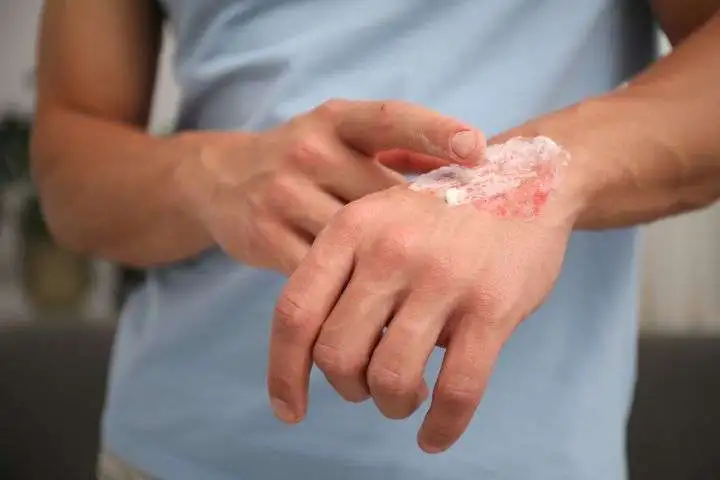
Once a burn wound has closed, the new skin may remain dry, itchy and sensitive for months. It may also feel tighter than the surrounding skin, particularly across a joint or another area that moves frequently. Care at this stage is less about dressing an open wound and more about protecting fragile skin as the scar gradually matures.
Specialist burn injury treatment does not necessarily end when the surface has healed. A clinical review may look at the color, thickness and flexibility of the scar, along with any effect on movement. Vegaderma treats burn scars according to the condition of the tissue and the problems the patient is experiencing rather than relying on the age or appearance of the injury alone.
Newly healed skin should be washed gently and patted dry without rubbing. Once the medical team confirms that the wound is completely closed, an unperfumed moisturizer may help reduce dryness and cracking. Apply a thin layer using clean hands and stop if it causes stinging, redness or a rash. Products containing fragrance or strong active ingredients may irritate skin that is still sensitive.
Itching is common during burn recovery, but scratching may break the skin and introduce bacteria. Cool rather than hot showers, soft cotton clothing and regular moisturizing may provide some relief. Keeping fingernails short may limit accidental skin damage caused by scratching during sleep. Persistent itching that affects rest or causes repeated scratching should be discussed with a clinician, as additional treatment may be needed.
Protect the scar from sun and friction
Healed burns and grafted skin are particularly sensitive to sunlight. They may burn quickly and develop changes in pigmentation that last much longer than an ordinary tan. Cover the area with suitable clothing and use broad-spectrum sunscreen with an SPF of at least 30 when it is exposed. Sun protection is generally needed for at least a year, although the treating clinician may recommend longer.
Clothing should not repeatedly rub against a raised or sensitive scar. Loose, breathable fabrics may be more comfortable, and seams or straps may need to be moved away from the affected area. If a pressure garment has been prescribed, it should be worn and cleaned according to the clinical team’s instructions. A garment that becomes loose, painful or damaged may no longer apply pressure correctly and should be checked.
Movement is particularly important when a scar crosses the neck, shoulder, elbow, hand, knee or ankle. Scar tissue can tighten as it matures and gradually reduce the range of motion. Stretching or physiotherapy may help maintain flexibility, but exercises should follow an individual plan. Forcing a tight area or copying exercises intended for another injury may split the skin or increase pain.
Scar massage should begin only after the wound has fully healed and the care team has approved it. Pressure usually starts gently because recently healed tissue is fragile, then changes as the scar develops. Silicone gels, sheets and other scar products also need appropriate timing and regular use. Applying several treatments at once makes irritation harder to identify and does not guarantee a better result.
The scar should be checked for new swelling, increasing redness, warmth, discharge, broken skin or worsening pain. Tightness that begins to restrict normal movement should also be assessed by the treating clinician. Raised scars may continue changing for many months, so photographs taken in the same lighting can help the patient and clinical team judge changes in thickness, color and size during follow-up appointments.