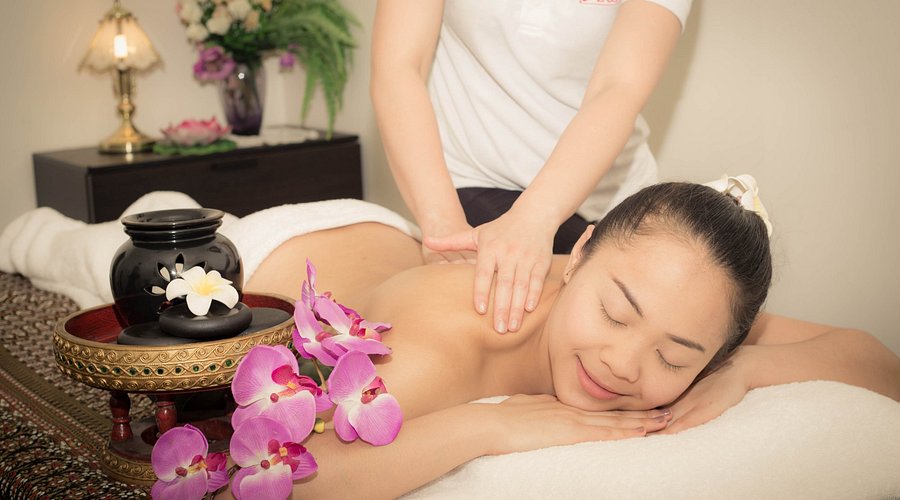
During a Thai massage, the therapist may lift one leg, guide a knee towards the chest or support the shoulders as the upper body turns. These movements are part of the treatment rather than a separate stretch at the end. They allow the therapist to work with several areas of the body at once and move joints through a comfortable range.
In an authentic Thai massage, pressure and assisted movement are used together. The therapist may apply pressure to the muscles before guiding the body into a stretch, then adjust the position according to how the person responds. This gives the treatment a different feel from an oil massage, where most of the work is done with strokes and pressure as the client remains still.
The therapist does part of the movement
Stretching by yourself requires the working muscles to hold a position or move a limb. During Thai massage, the therapist supports some of that weight and controls the direction of the movement. The person receiving the massage can remain relaxed instead of trying to pull harder or reach further.
The support also allows the therapist to change the angle gradually. For example, a tight feeling behind the thigh may change depending on how far the hip is bent and the position of the knee. A therapist can reduce the movement, reposition the leg or hold the stretch for less time when the body begins to resist.
Thai massage does not involve performing a fixed sequence at full intensity for every client. Someone who spends the day sitting may need attention around the hips, upper back and shoulders, whereas another person may feel restricted through the legs after training. The therapist should ask about these areas before beginning and alter the session rather than forcing the body through every available position.
Stretching and pressure serve different purposes within the same treatment. Pressure can be applied to a specific area of muscle, while an assisted stretch moves the limb and changes the position of several muscles and joints together. Combining the two allows the treatment to move between focused work and broader movements across the body.
The stretch should never become a test
A Thai massage stretch may feel strong, but it should not produce sharp pain, numbness or a feeling that the joint is being forced. The therapist cannot feel exactly what the client feels, so clear feedback matters throughout the session. Asking for less movement or pressure is part of receiving the treatment properly, not a sign that the massage has failed.
People vary considerably in flexibility, and reaching a dramatic position is not the aim. A smaller movement performed comfortably may be much more appropriate than a deep stretch that causes the person to tense up. Breathing normally and remaining relaxed gives the therapist better information than trying to endure an uncomfortable position in silence.
Tell the therapist about recent injuries, surgery, joint problems, pregnancy or any medical condition that could affect movement before the massage starts. Some stretches may need to be changed or left out completely, and anyone unsure if massage is suitable should speak with a healthcare professional first. Comfortable clothing that allows the hips, knees and shoulders to move will also make the assisted positions less restrictive.