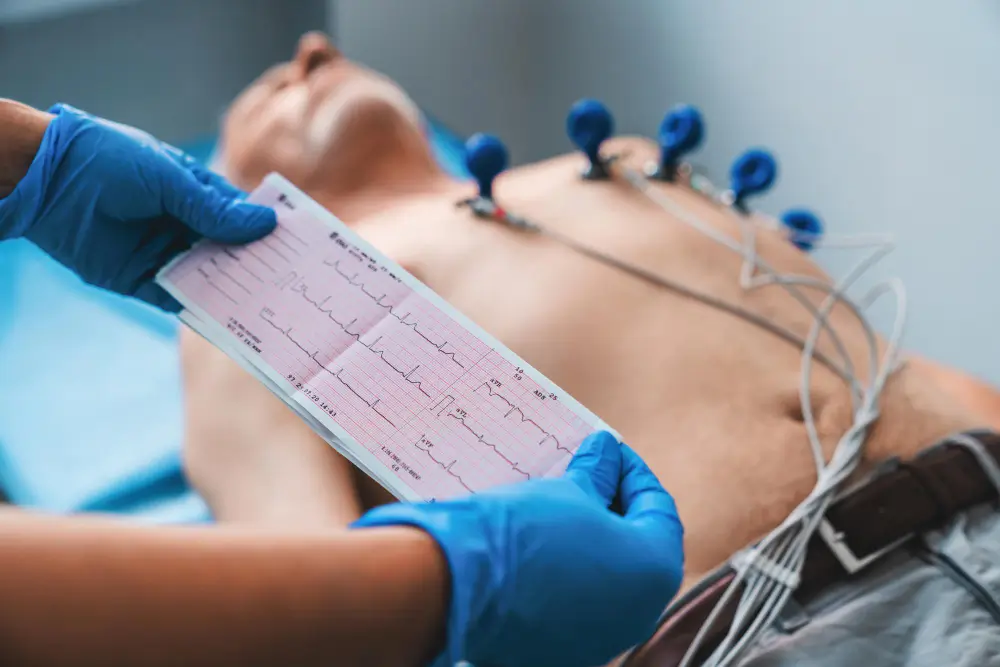
An electrocardiogram records the electrical activity of the heart. It can show rhythm problems and certain changes linked to reduced blood flow or injury to the heart muscle. However, it does not directly produce a picture of the coronary arteries. Research on acute coronary syndrome diagnosis supports combining symptoms, ECG findings and blood tests rather than relying on one result alone.
Small pads called electrodes are placed on the chest and limbs. The machine records electrical signals from different directions.
The test is quick and painless. It can identify some abnormal rhythms, previous heart damage and active changes that may occur during a heart attack.
A normal ECG does not prove that every artery is clear. A blockage may not create visible electrical changes when the test is performed.
Some people have intermittent symptoms. An ECG recorded after the pain has ended may look different from one recorded during the episode.
Doctors therefore interpret the tracing with the person’s symptoms and risk factors. Age, diabetes, blood pressure, cholesterol, tobacco use, kidney disease and family history all matter.
Blood tests such as troponin may be used when a heart attack is suspected. The test may need to be repeated because the level can change over time.
An echocardiogram shows the movement and pumping function of the heart. It does not provide the same information as an ECG.
An exercise stress test may show how the heart responds to activity. It is not suitable for every patient or every emergency situation.
CT coronary angiography can provide images of the coronary arteries in selected patients. Invasive angiography may be used when detailed information or immediate treatment is needed.
A smartwatch ECG may help record certain rhythm problems, but it cannot replace a full medical assessment for chest pain or possible blockage.
People should not attempt to interpret every line of an ECG report without clinical context. Minor findings may be harmless in one person and important in another.
Madhavbaug offers a patient guide on whether an ECG can detect heart blockage. Readers can find broader clinic and service information through Madhavbaug.
Call emergency services when chest pressure is severe, persistent or accompanied by sweating, fainting, breathlessness, nausea or pain spreading to the arm, jaw, back or shoulder.
A normal ECG should never be used as the only reason to dismiss continuing or worsening symptoms.